Treat the extension as its own roofing decision
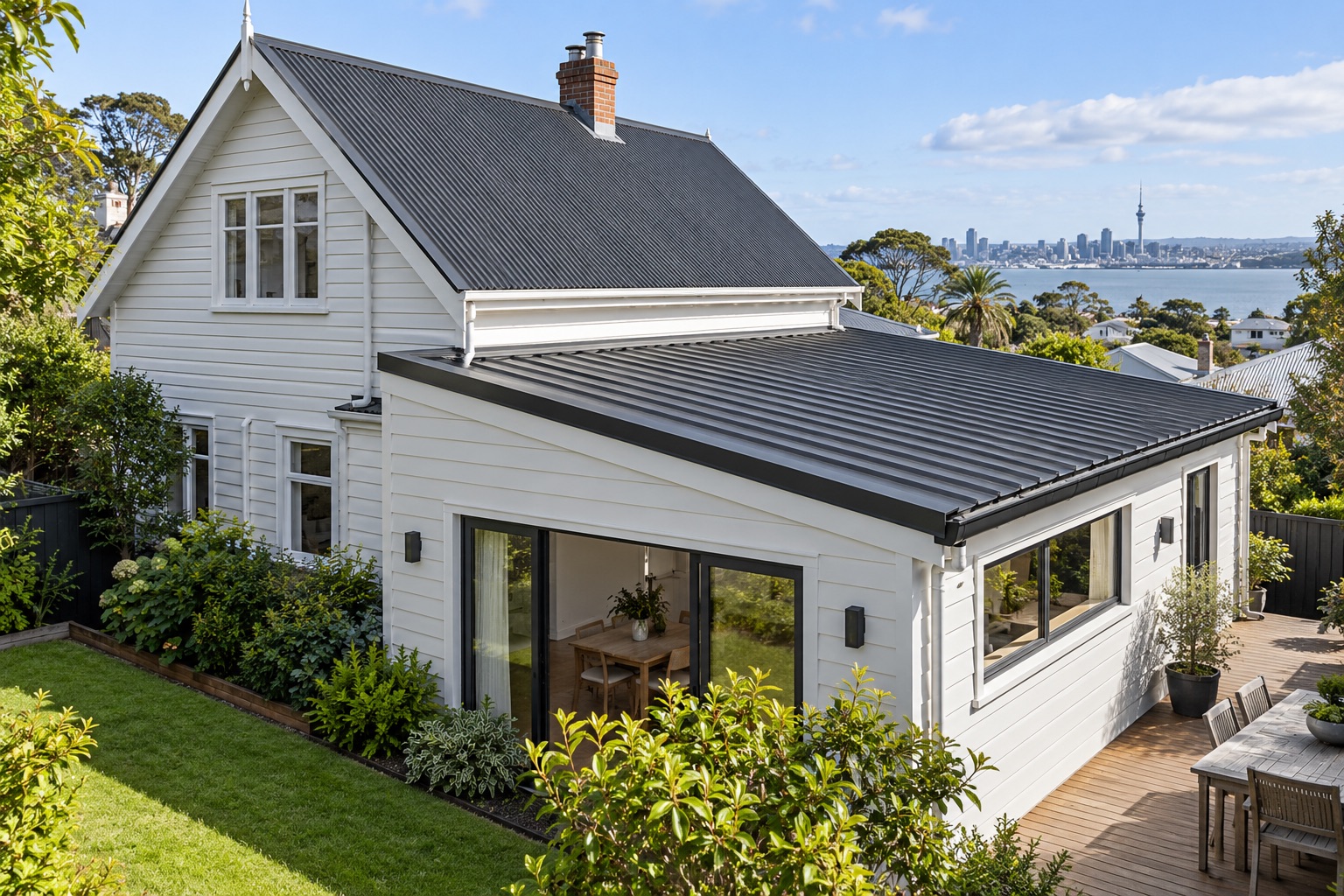
An older home may have a steep main roof and a much shallower roof over the kitchen, garage or later addition. When that smaller roof needs replacing, “match the house” sounds straightforward. It describes the appearance you want, but it does not establish which sheet profile will suit the extension.
COLORSTEEL's guide to roofing profiles identifies pitch as a factor that can restrict profile choice and recommends discussing low-pitch roofs with a roofing professional. Start there, before ordering material to match the main roof.
You do not need to determine the slope yourself. Ask for it to be checked and recorded as part of the assessment. Do not climb onto the roof to measure it.
Ask for the actual slope, not “roughly flat”
For an existing roof, ask the assessor what was measured on site and what has only been taken from drawings or photographs. If different sections have different slopes, have those sections identified rather than describing the whole property with one number.
A useful written question is: “Which measured roof area does this profile recommendation apply to?” It keeps the conversation specific, particularly when the quote covers both the main house and an extension.
If there are areas that could not be assessed, ask when they will be checked and whether the material order depends on that check. A photograph is useful for planning a visit; it is not a substitute for the measurements and condition assessment needed for the specification.
Match the requirement to a named product
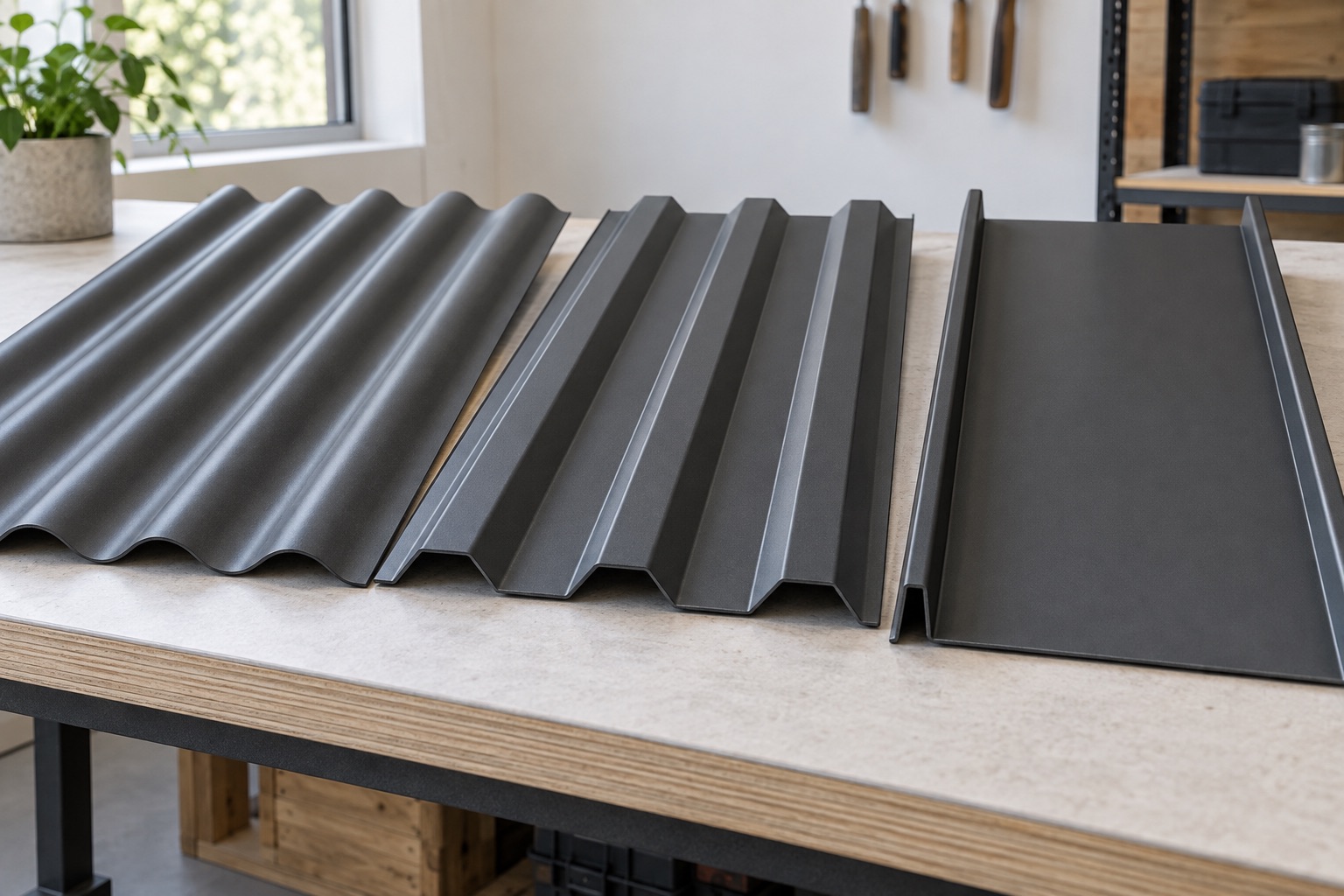
Ask for the profile name, its manufacturer or rollformer, and the technical document used to assess suitability. “Trapezoidal” or “long-run” alone leaves too much unspecified. COLORSTEEL's re-roofing advice notes that suppliers offer different versions of profiles, including trapezoidal sheets.
There is also a difference between the formed shape and the coated material. For example, ColorCote's MagnaFlow technical brochure sets out pitch limitations and links insufficient pitch with ponding and premature coating degradation. Do not take one general minimum from a brochure as approval for every roof using that brand.
Ask the designer or roofing professional to confirm how the proposed assembly meets the applicable product and profile requirements. Our profile, coating and colour guide helps keep those parts of the specification separate.
Include the junctions and drainage in the assessment
A replacement proposal needs to explain more than the new sheet. Ask the assessor to review the connection to the main house, any wall junctions or penetrations, and where the water will discharge. Describe any overflow or staining you have noticed, with dates and safely taken photographs, without assuming you know the cause.
Useful questions for the written scope are:
- Are existing flashings and gutters being retained, altered or replaced?
- Does the proposal depend on changes to the supporting structure or roof slope?
- Who will resolve any design questions before the sheets are ordered?
- What happens if removal reveals conditions that differ from the assessment?
These are checks to request, not instructions for modifying the roof yourself. If a different profile is proposed, ask which related details change with it. See our flashing quote guide for making those boundaries clearer.
Agree the technical choice before the visual match
Once the suitable options have been established, compare how they will look alongside the main roof. Ask for actual samples and clarify the finish rather than relying only on a screen image. A similar colour can help coordinate two roof areas without assuming they must use identical profiles.
Keep the confirmed slope information, product specification and agreed scope with the quote. When enquiring about steel roof installation, mention the shallower roof area and any known drainage concerns at the outset. That gives the planning conversation a more useful starting point than “replace like for like”.