A roof can look tidy from the driveway and still leave its owner with unanswered questions. What coating is on it? Was the last gutter clean recorded? Does the section beneath the solar panels need a different maintenance routine?
For an Auckland home near the coast, those are useful questions to settle before booking a wash or buying a treatment. Start with the roof you actually have, not a generic cleaning schedule.
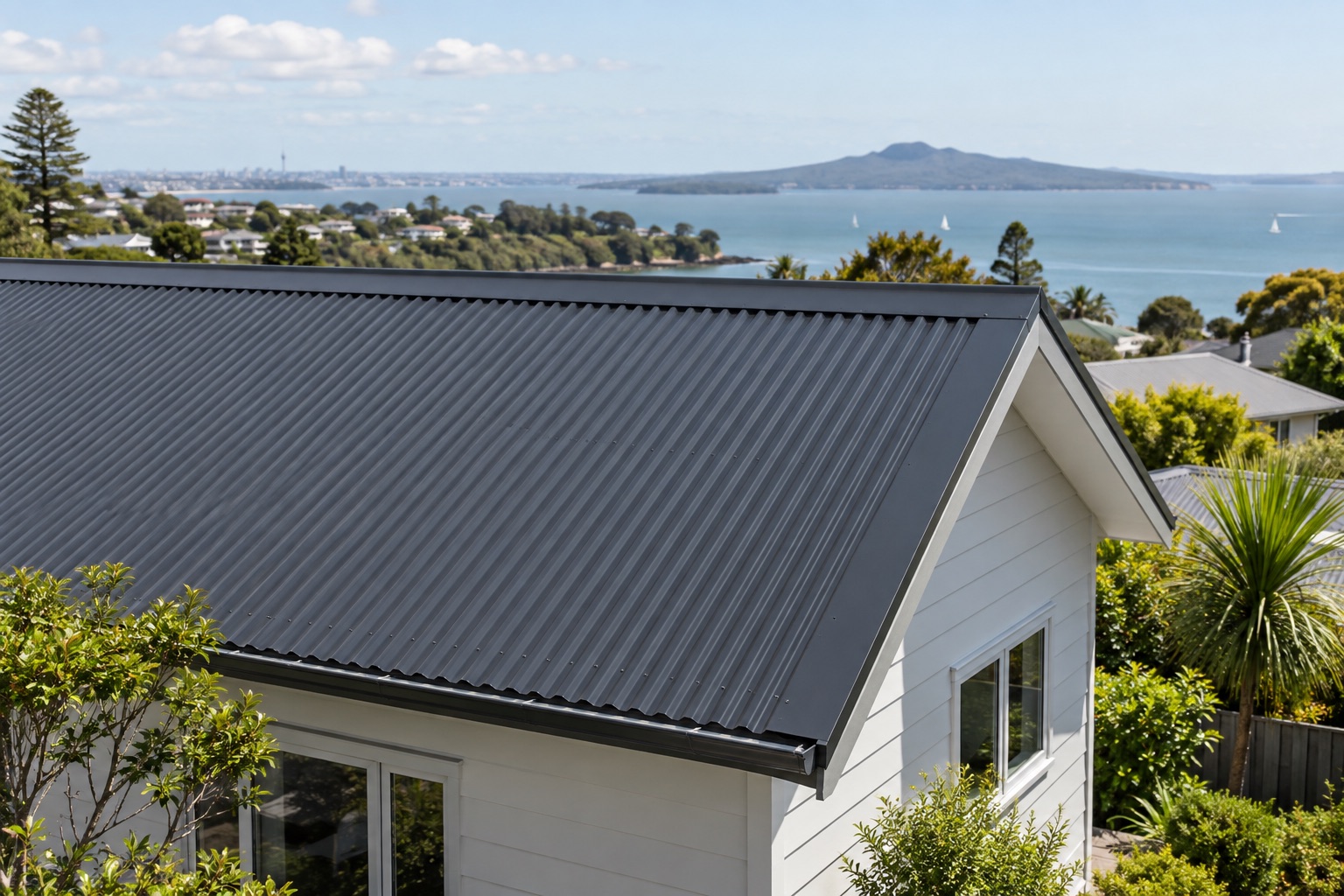
AI-generated illustration, not a Full Tree customer project or a product colour sample.
Find the product details first
Look through the handover documents, roofing invoice and warranty certificate. Keep the manufacturer, product name, installation date and installer details together. A colour name or a description such as “metal roof” is not enough to identify the complete system.
If you bought the house after the roof was installed, ask the previous owner or installer for the missing paperwork. If it cannot be found, say so when arranging an inspection. It is better to establish what is known than to assume that a cleaning product or warranty applies.
COLORSTEEL and ColorCote publish their own maintenance information. ColorCote also explains that its warranties are specific to the building, location and product. Use the manufacturer's warranty information alongside your own certificate, rather than treating an advertised warranty period as a promise for every roof.
Pay attention to the places rain misses
COLORSTEEL's maintenance recommendations distinguish rain-washed surfaces from sheltered areas. Fixtures such as solar equipment can create areas that need additional attention.
Ask the person maintaining your roof to identify these locations on a photograph. A marked-up image is often more useful at the next visit than a note saying “roof checked”. Do not climb onto the roof to take it yourself; ask the contractor to document the areas as part of safely planned work.
A simple checklist for arranging maintenance
Before you call, gather what you can safely observe from the ground or indoors:
- Where the concern is: front gutter, garage roof, upstairs ceiling, or another recognisable location.
- When it happens: during rain, after a windy night, or all the time.
- What has changed: a new stain, repeated gutter overflow, visible debris, or recent work by another trade.
- What records exist: previous inspection reports, photographs, invoices and the maintenance instructions supplied with the roof.
You do not need to diagnose the cause. A ceiling stain alone does not establish which part of the roof needs work. Give the contractor the observations and ask for the findings in writing.
Agree on the method before anyone starts
Avoid booking on the description “roof wash” alone. Ask which surfaces are included, which cleaning method is proposed and how it matches the instructions for your particular product. The same discussion should cover sheltered sections, gutters and any roof-mounted equipment.
There is no single washing interval suitable for every Auckland roof. ColorCote's published schedule varies by product and environment. Ask for the relevant schedule to be attached to your maintenance plan, including who is responsible for the next visit.
Treat cleaning and repair as different scopes. If a contractor finds a damaged area, ask them to explain the finding, provide photographs and quote any additional work before proceeding. Our roof repair service is a starting point when you need a problem assessed rather than simply cleaned.
Keep a small, useful maintenance record
A folder on your phone is enough to begin with. Save the date, contractor, work description, invoice and before-and-after photographs. Add the product instructions and warranty certificate so they can be found together.
Ask for a specific next action: “check this flashing at the next visit” is more useful than “monitor roof”. If the property is rented, agree who receives reports and who arranges access. These small details make maintenance easier to continue when a property manager or owner changes.
Records help explain what has happened; they do not, by themselves, guarantee that a warranty claim will be accepted. The applicable terms and circumstances still matter.
When the question is repair or replacement
Do not make that decision from the appearance of the whole roof in a distant photograph. Ask what can be repaired, what remains uncertain and whether further inspection is needed. Request separate scopes where both repair and replacement are realistic options.
Our repair or replace guide covers how to compare those options. For a newly completed roof, the after-sales care guide helps you organise the handover information.
If you would like Full Tree to discuss your Auckland roof, send an enquiry with the property location, any product details and photographs taken from a safe position. That gives the conversation a useful starting point without pretending that a photograph replaces an inspection.
This article is general planning information. Follow the current instructions and warranty terms for the installed product; site-specific maintenance and repair decisions need an appropriate assessment.