After a wet, windy night, it is tempting to look for the answer immediately. For a homeowner, the useful first task is usually to record what can be seen safely, not to get onto the roof or decide which component has failed.
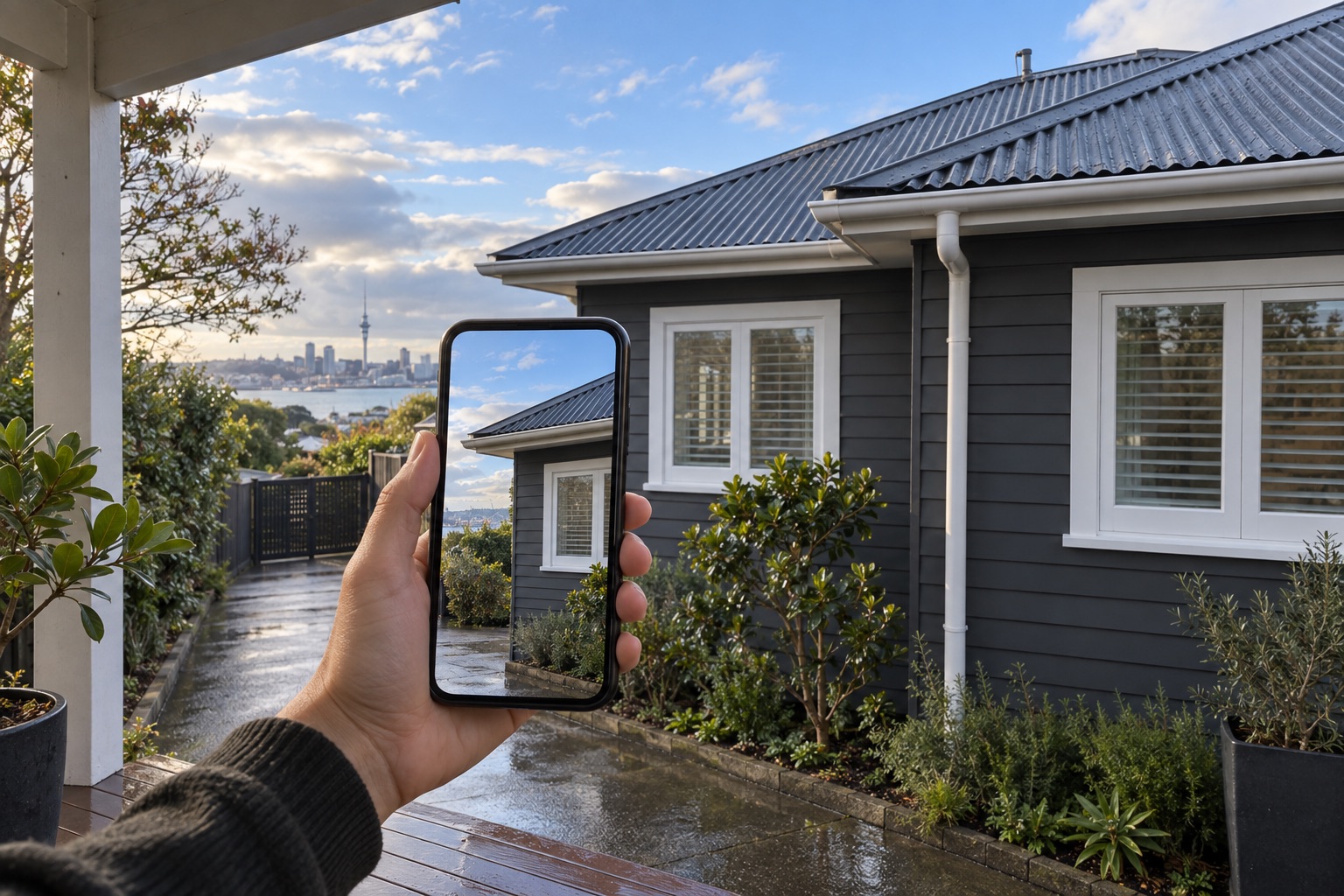
AI-generated illustration, not a photograph of storm damage.
Keep the observation separate from the diagnosis
Write down when you noticed the concern, which room or outside area is affected and whether it happened during rain or afterwards. If a stain has changed, photograph the wider location as well as the mark. Keep the original files with their dates.
Avoid labelling the cause before an assessment. “Water appeared near the upstairs window” gives an inspector information. “The ridge is leaking” may send the discussion in the wrong direction if it is only a guess.
Leave inaccessible areas to an arranged inspection
Do not use the need for photographs as a reason to climb a ladder, enter a damaged area or walk on a roof. Ask the roofing contractor how the inspection can be carried out safely. WorkSafe provides roof inspection and access resources for planning this work.
If there is immediate danger, keep away and contact the appropriate emergency service. For a non-emergency concern, explain any limits on what you could observe. An honest gap in the information is better than a risky attempt to fill it.
Keep the report and next action together
When someone inspects the roof, ask for findings, photographs where available and a clear distinction between temporary measures and proposed repairs. Record who will arrange the next step and whether another visit is needed.
Contact your insurer directly about its evidence and claims process; a roofing assessment does not itself confirm insurance cover. For the initial roofing conversation, use our enquiry checklist and roof repair page.